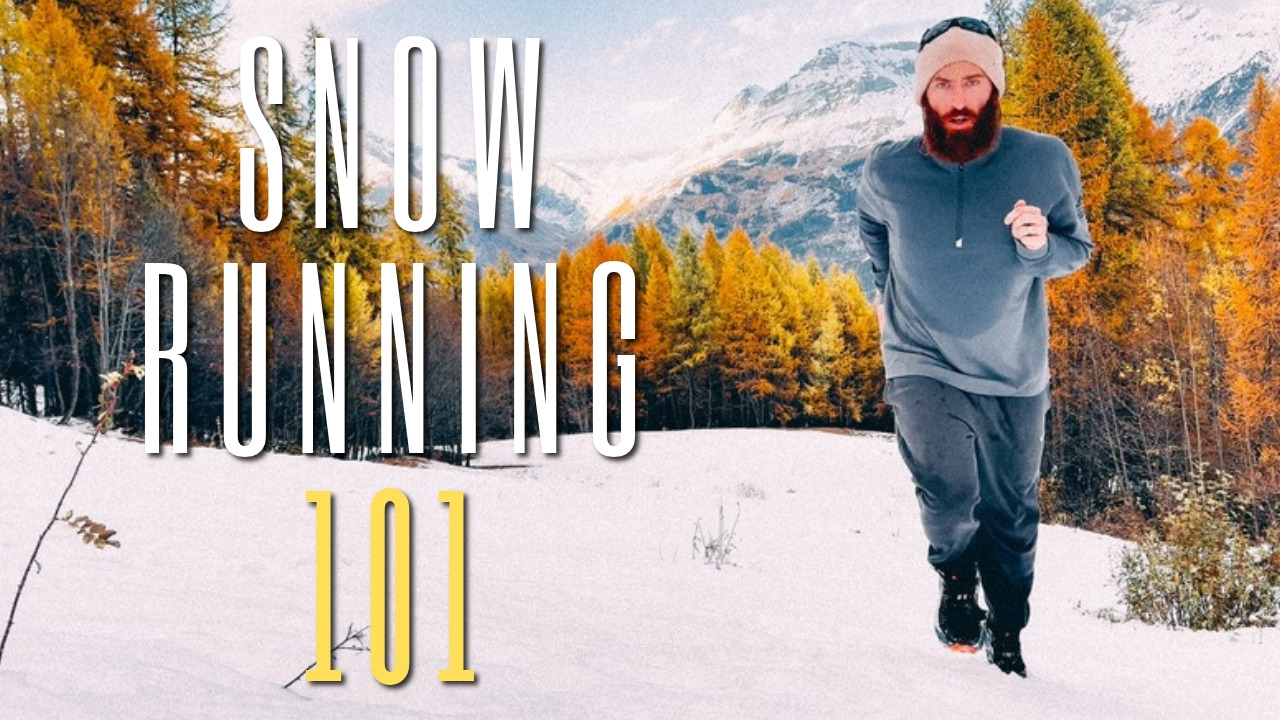
To run in snow without slipping, take short, choppy steps on the uphills, land flat on the center of your foot on the downhills, and slow your pace way down. Wear shoes with good grip, keep your ears, hands and legs warm, and build up your snow mileage slowly. Here's everything I learned on my first snow run of the year in the French Alps.
Subscribe on YouTube New videos from the trails, straight to your feed.
We got three full days of snow in Puy-Saint-Vincent, so I went out in trail shoes, no microspikes, and ran all the way to a waterfall in Ecrins National Park.
Snow running tips at a glance
- Flat snow: open up your stride, just don't change the way your feet land
- Uphills: short, choppy steps
- Downhills: flat feet, land on the center of your foot
- Deep snow: short steps, drive your knees up
- Pace: about two minutes slower than your normal zone 2
- Feet: land midfoot to forefoot, not on your ankles and Achilles
- Steep 30% slopes: turn your foot sideways and stomp it in
- Steep downhills: step out into the fresh snow
- Build up slowly: about 10 miles the first week, 15 the next
What to wear for snow running
There are a few basic things you need. Something to keep your ears warm and your hands warm. I like to have something to keep my legs warm too, because my knees get really, really cold when I'm running in the snow.
Bring sunglasses. Snow glare is no joke.
Shoes with grip
Most important of all is your footwear. I ran in the ASICS GEL-Trabuco 13. The tread on them is super nice and they have really good grip in the snow.
Make sure your shoes have enough traction before you head out. When your tread is packed with snow, bang your shoes off so the grip can do its job again.
If you're shopping for a runner, the Asics I run in now are on my list of gifts for trail runners.
Running on flat snow
On the flat stuff you can really open up your stride. You don't have to worry as much about your footing. Just make sure you're not stepping on any ice or big chunks of snow.
Be confident on the snow, and don't change your stride too much. That will lead to injury. Your feet should land the same way they would on a road or a trail. Gain some speed and get those legs moving.
Shorter steps on snowy uphills
On the uphills, don't take big, loping steps. That's going to make you slip. Take small little steps all the way up.
Snowy downhills: flat feet
Coming back down, also take shorter steps, because big steps are how you slip out. Land on the center of your feet so you get as much traction as possible. The downhills are where you're going to slip, so use as much of that sole as you can.
The hill in the video was about an 8 to 10% grade. If those gentler slopes are all you're comfortable with, that's completely normal. You don't have to do anything super steep in the winter.
Deep snow running
In ankle-deep snow, keep taking those short, choppy steps and move forward a little bit at a time. Huge steps waste a lot of energy. Drive your knees up and land flat on your feet onto the next one.
I was lucky: someone had already broken the trail that morning. I would not want to be the one paving it on my own.
Slow your pace way down
Whatever your normal zone 2 pace is, I would take about two minutes off of it. That saves you from slipping and from injury tremendously.
Protect your ankles and Achilles
Don't put too much of your weight on your ankles. If you feel your Achilles tendon flexing a lot, that's a sign to change it up. Land on your midfoot to forefoot so you're not putting all the pressure on your Achilles. That's how you get injured.
Have fun in deep snow
In really deep snow, you don't need to worry as much about slipping. Have fun with it. Jump around, slide around. Trail shoes maybe aren't the best for knee-deep snow, but they did the job. Take quick, deep steps and drive those knees.
Take walking breaks
This is not your normal trail running. You're going to be walking whether you like it or not, so if you're heading out on snowy trails, be prepared to walk a little. It's all part of the game, and you're working that aerobic engine so hard.
Steep 30% slopes: stomp your feet
On a steep drop-off in fresh snow, turn your foot sideways to the trail, walk down, and stomp your foot as you go. That makes sure you don't slip.
On the way up a 30% slope, stomp your foot down and get a really solid foothold before you take the next step. I didn't have poles, so I made sure my feet were stuck in the snow, not sliding around.
Steep downhills: hit the fresh snow
On really steep downhills, spread your feet out into the fresher snow. If you're walking, walk in other people's footsteps. But if you're trying to run, don't be afraid to hit the fresh snow. It keeps you more stable and lets you run a little quicker.
Watch out for spots where there's rock under the snow. The snow compacts there and gets really slick, especially when your tread is already full of snow.
Switching from trail to snow
Snowy downhills aren't the same as trails. If you're running down a trail and hit a patch of snow, you can't keep going the same way. Switch it up: do quick steps downhill, use those muscles, and stabilize yourself.
Build up your snow mileage slowly
Start slow. Don't go 15 miles on your first snow run. Maybe try about 10 miles the first week, then 15 the next week, and build up from there. Mix in some runs indoors or on the road. And don't start off at 50 miles a week in the snow.
If you're building your easy miles this winter, my aerobic base training plan is all zone 2 running.
Leave earlier in winter
The sun sets a lot earlier in winter. If you're an afternoon runner like me, leave the house about an hour earlier than you're used to. If you're a morning runner, you know what to do.
Recap
Be careful out there, and don't do anything you're not comfortable with. Stay on the packed paths, and try not to be the first one out on the trail in the morning, because that's when it can get sketchy. Warm into the training and stay injury-free.
The run ended at a beautiful waterfall in Ecrins National Park, and I couldn't have gotten there without running through a lot of snow. For another run in the same mountains before the snow came, here's my run up to Lac du Grand Laus.
What's the snowiest run you've ever done? Tell me in the comments on the video.